I will be writing about these 3 days (February 16-18) in 3 separate posts. Mainly, because one journal entry isn’t enough to convey these 3 rich days. Also, I think that as time goes by I will process these days differently. So, I want to show that processing by giving myself the luxury of posting over several days.
Being with the Maasai people is like taking a Time Machine to the time of Moses. After 3 full and stimulating days you then take that Time Machine back to your era and are asked to write about it in a way that your family, friends, and contemporaries can understand.
Let me begin by giving the anthropologist’s description of the Maasai people. While the Maasai are one of the smaller tribes in Kenya, they are one of the most well known and most traditional tribes in Kenya. They are semi-nomadic, and live in small round, stick, mud, and dung huts called Manyattas. These are made by the women of the tribe. In an age of overpriced real estate, this keeps their mortgage payments low.
They have a class system. They are quite patriarchal. They are known for being warriors. Although, the government doesn’t technically allow them to hunt and kill lions anymore for the sake of allowing their young men to become Morans, i.e. warriors (but from some conversations with them, it still happens. They just have to be careful no government eye is around while they do it), they are still known for hunting lions.
However, the anthropologist description, and even my own description to follow, is not sufficient. Perhaps, I will begin by simply telling you how I (and my church) got involved with working with the Maasai tribe (specifically, a local Maasai tribe in southwestern Kenya).
This work started with my Grandpa, Blake Lasslett, in the early 2000’s. He, at 64 came to Kenya as a “retired” pastor (of course, pastors never really retire), to serve, preach, and plant churches in Kenya. Soon, he got involved in planting churches among the most interior regions of the Maasai peoples.
My grandpa has passed, but the work hasn’t. From those beginnings, my own church, Phos, has had the privilege of carrying on the torch of supporting one of these church’s.
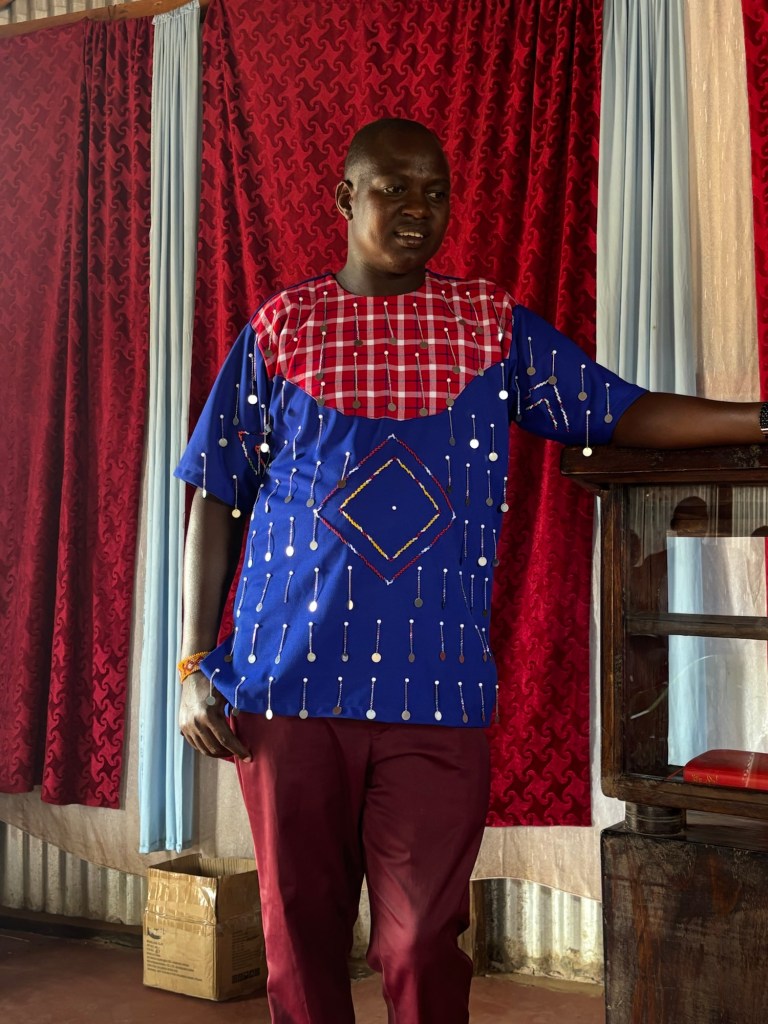
They say a picture is worth a thousand words. Perhaps one picture and maybe some videos will suffice for my inefficiency to deliver satisfactory words for this post. Me speak better with words tomorrow.
 Franks Kenya trip 2026